Falling sand, explained
What is a falling sand toy?
A falling sand toy is a small sandbox where you drop grains and watch gravity pull them into piles, streams and dunes in real time. The genre began with a 2005 Java applet. Dunarium is a phone version: tilt your iPhone or Android and real gravity pours the sand across 30 palettes and 28 glass shapes.
Last updated
What is a falling sand toy?
A falling sand toy is a tiny sandbox built on sand physics. You drop grains onto a screen and watch them fall, pile up, slide down slopes and settle one grain at a time. Add water and it pools. Add a wall and the sand heaps against it.
A few things define the genre:
- A toy to play with. There is no score, no goal, and no way to lose. You make something, wipe it, and start over.
- Sand that runs on physics. Every grain is simulated, following simple rules each frame, so piles and streams form on their own.
- Something you can run again and again. The sand is the same, but you get a new landscape every time you stir it.
"Falling sand simulator," "falling sand game" and "powder game" all point at the same idea. The differences are mostly depth: some are two-element calm toys, while others simulate heat, electricity and chemistry.
Where did falling sand games come from?
The genre is about twenty years old, and it grew in a few clear steps.
- 2005: the first hit. A Java applet posted on the Japanese Dofi-Blog let people drop sand, water, salt and oil and watch them react. Rehosted as the "Falling Sand Game," it spread fast and gave the genre its name. (Wikipedia)
- 2008: the desktop powder game. The Powder Toy, started by Stanislaw Skowronek and now community-maintained, is a free, open-source simulator with heat, pressure and hundreds of materials. It reached Steam in 2024 and is still updated.
- 2008: the calm browser toy. Thisissand went the quiet way: a single-material sand-painting toy in the browser. It became a phone app in 2012 and is still running.
- 2018: the modern rebuild. Sandspiel by Max Bittker rebuilt the browser toy in Rust and WebAssembly, with a public gallery of shared creations.
- 2021: the everything sandbox. Sandboxels by R74n pushed the element count past 500 (chemistry, life, food, bugs) and grew a large modding community. In February 2026 it moved to neal.fun (the old R74n link redirects there).
Each of these is good at something in particular: Powder Toy for depth, Sandspiel for elegance, Sandboxels for sheer variety, Thisissand for quiet.
Browser toy, powder game, or physical frame?
Falling sand shows up in four shapes. The main difference is how you move the sand.
| Form | Examples | Runs on | How you move the sand | Cost |
|---|---|---|---|---|
| Browser toy | Thisissand, Sandspiel, Sandboxels | Any web browser | Draw with mouse or finger | Free |
| Desktop powder game | The Powder Toy | Windows, macOS, Linux, Steam | Mouse; hundreds of elements | Free / open source |
| Physical sand frame | Moving sand art frames | A shelf or desk | Flip the frame by hand | One-time physical purchase |
| Phone app | Dunarium | iPhone, Android | Tilt the phone for real gravity | Free; optional one-time $4.99 |
With browser and desktop toys, you move the sand with a mouse. With a physical frame, you move it by flipping the whole object. With Dunarium, you tilt the phone.
What is moving sand art, and is there an app for it?
Moving sand art is the physical cousin of the falling-sand toy. A sand picture frame seals colored sand, a clear liquid and a little trapped air between two panes of glass. Flip it, and the air bubbles rise while the sand sifts down into ridges, dunes and horizons. Because the air settles a little differently each time, you rarely get the same picture twice.
People search for this as "moving sand art" or "sand picture frames": the framed, glass-and-liquid kind.
An app can borrow that look (layered sand, gel, rising bubbles inside a glass vessel) and do one thing a frame can't: respond to how you hold the phone, and that is the gap Dunarium fills.
Where does Dunarium fit?
Dunarium is a relaxing falling sand toy. Download it on iPhone or Android.
The difference from every toy above is real tilt gravity. Tilt the phone and the sand pours the way gravity pulls it. Lift one edge and the grains slide that way. Nothing is a prerecorded animation.
What's inside:
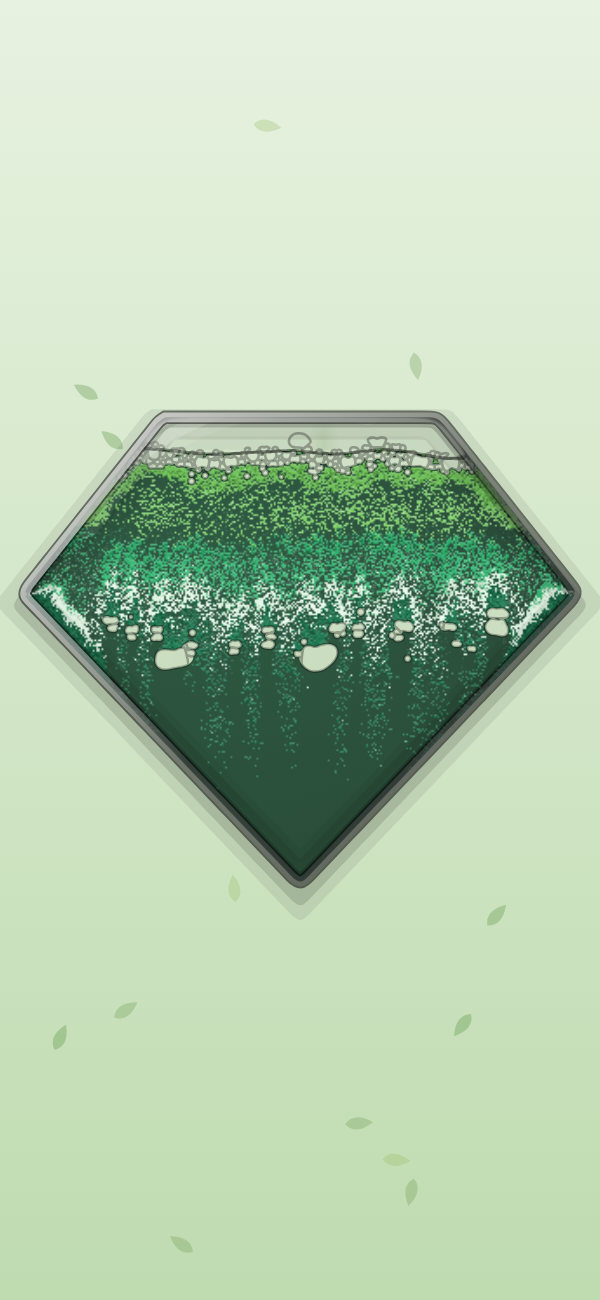
- Layered sand, viscous gel and rising air bubbles inside glass vessels. Pour and stir with a finger; shake the phone to churn a whole new landscape.
- Freeze gravity when you want it to hold still. "Make this upright" sets any resting angle as level.
- A procedural ASMR soundscape (ticks, bloops, churns) generated live as the sand moves, with a per-voice mixer for sand, bubbles and churn. Gentle grain haptics that you can adjust.
- 30 sand palettes, 28 glass shapes, 49 backdrops (some animated, one live-camera), adjustable grain size, and a button to roll a random look.
- Moments: Zen (slow drifting gravity), Ambient (a dim bedside scene with a clock), Sleep (a timer that fades light and sound out) and Focus (a sand hourglass that ends in a soft chime). Sleep and Focus run from 30 seconds up to 12 hours, set in 30-second steps.
- Portrait turns a photo into sand that holds still until you tap it.
- Clip recording bakes the soundscape into the video, with a caption editor and an end-card showing the look used.
The quiet parts: no ads, no account, and it works offline after install. Camera frames and sensor readings stay on the device. Everything is free; the optional one-time "Unlock Everything" (planned $4.99) opens every palette, glass shape and backdrop. There is no subscription.
Is a falling sand toy actually relaxing?
For a lot of people, yes: watching sand fall is calming the same way watching rain or a campfire is. It gives your hands something small to do and your eyes something slow to follow.
This is an everyday kind of calm. Dunarium is a toy. It is not a wellness or medical product, and it does not treat anxiety, sleep trouble or anything else. If something is wrong, talk to a real person who can help. The sand is here to be nice to fiddle with.
Common questions
- What does "falling sand game" mean?
- It's a genre of physics toy where you drop simulated grains and watch gravity pile and move them in real time. There is no score or goal, so you make a landscape, then stir it and start again.
- Is there a falling sand app for phones?
- Yes. Dunarium is a falling sand toy available on iPhone and Android. Tilting the phone pours the sand with real gravity. Browser toys like Sandspiel and Sandboxels also run in a phone's web browser.
- What's the difference between a falling sand toy and moving sand art?
- Moving sand art is a physical frame of sand, liquid and air that you flip by hand. A falling sand toy is the on-screen version, where you move the sand with a mouse, a finger, or, in Dunarium, by tilting the phone.
- Is Dunarium free?
- Yes. Dunarium is free to play with no ads and no account. One optional one-time purchase, "Unlock Everything" (planned $4.99), opens all 30 palettes, 28 glass shapes and 49 backdrops. There's no subscription.
- Does Dunarium use real gravity or a recorded animation?
- It uses real gravity. The phone's tilt drives a live simulation, so the sand pours toward whichever edge you lower. Nothing is prerecorded.
Get Dunarium on iPhone or Android
Download it free from the App Store or Google Play. No ads, no account, and it works offline.